UnaGPT Art
UnaGPT Art
UnaGPT Arts uses AI to analyze students' history and geography responses, providing personalized feedback to address their weaknesses. It not only helps overcome analytical blind spots in spatial and causal reasoning but also fosters critical thinking, comprehensively enhancing their comprehension and expression skills in the arts.
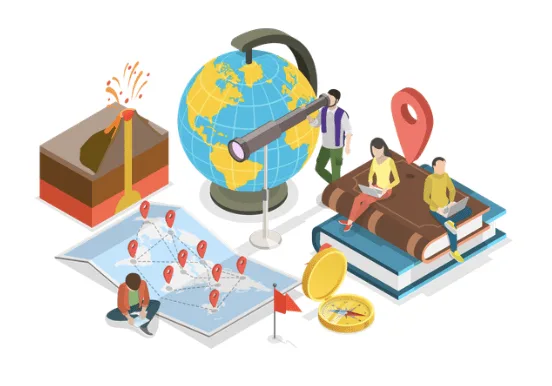
Geography
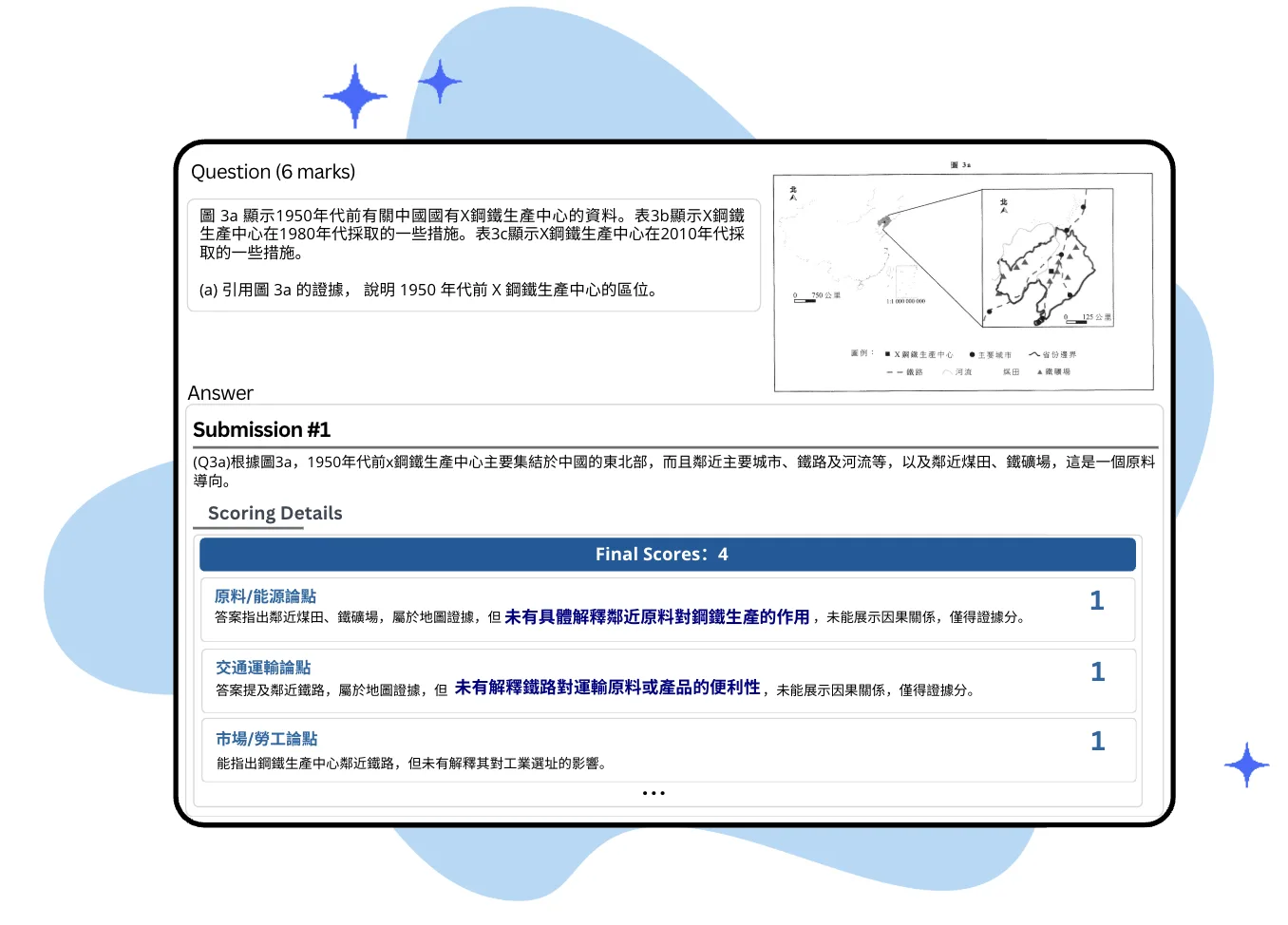
Mastery of geographic concepts and chart‑representation skills, supported by accurate identification of students’ understanding of spatial concepts, geographical phenomena, and chart data, with targeted feedback that strengthens geographic thinking and expression.
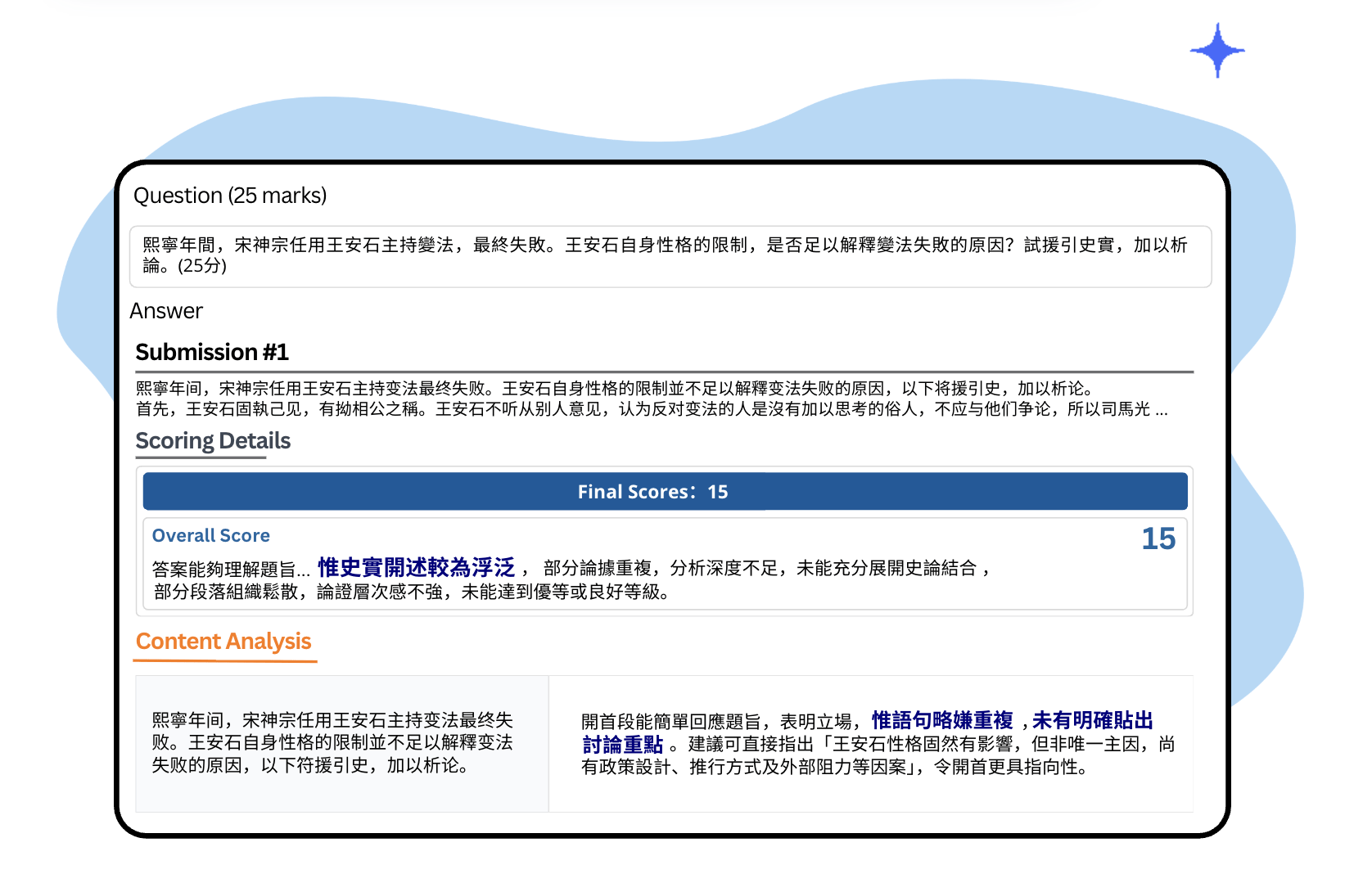
Chinese History
Master historical events and refine argumentation skills through accurate assessment of students’ understanding of Chinese historical events, causal analysis, and interpretation of ancient and modern sources, building solid historical thinking and well‑structured reasoning.
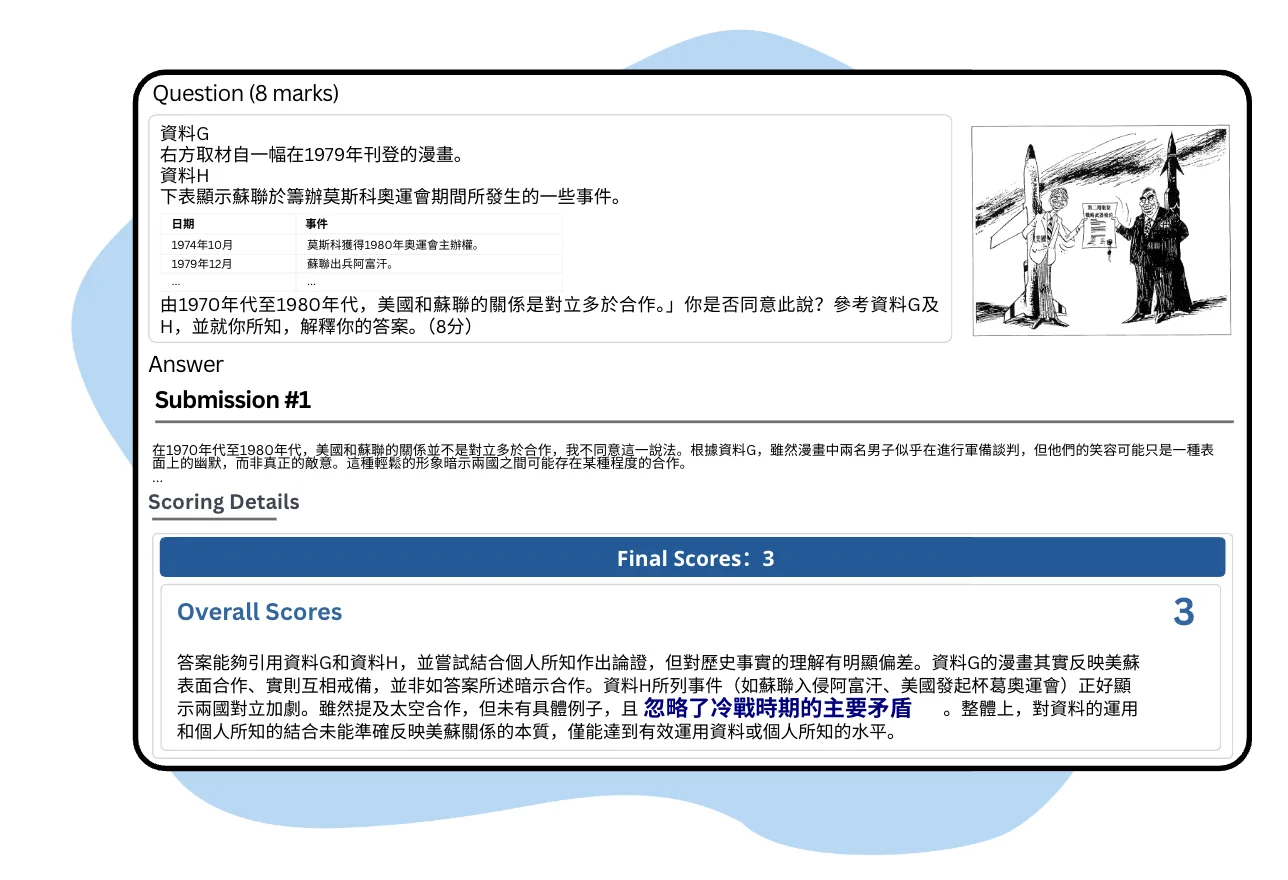
History
Historical argument analysis that precisely evaluates students’ interpretation of sources, mastery of factual content, and logical argumentation, providing targeted revision guidance to strengthen historical analysis and argument‑construction skills.